
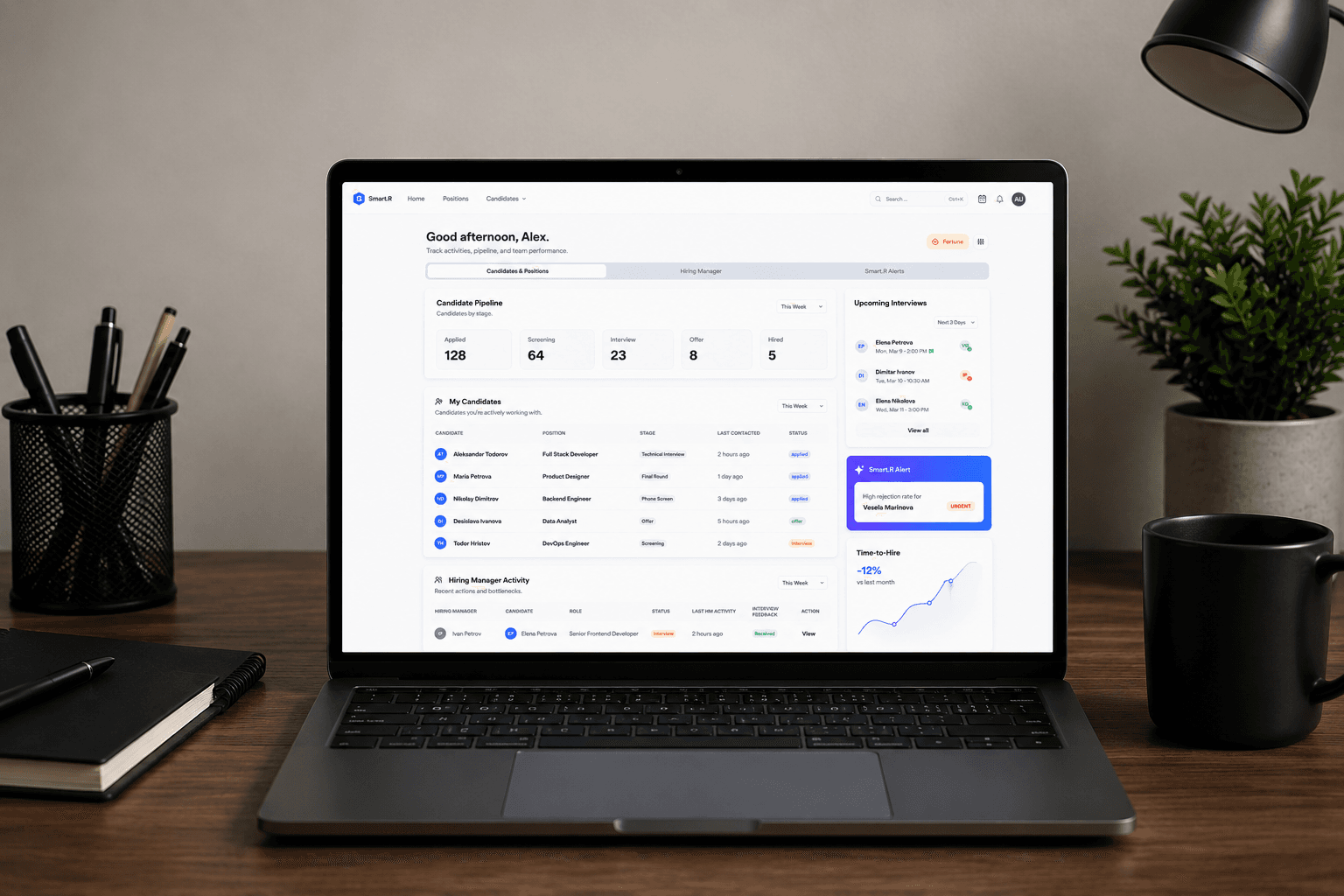
When companies evaluate an applicant tracking system (ATS), most conversations focus on recruiter productivity. Teams compare dashboards, reporting tools, automation features, interview scheduling, and workflow customization. Those are all important, and anyone who has managed a recruitment function understands why these discussions happen.
At the same time, many hiring teams spend surprisingly little time looking at the experience from the candidate's perspective. That is interesting because candidates interact with the ATS long before they speak with a recruiter, and for many applicants the application process shapes their first impression of the employer.
After years of recruiting across technical, commercial, and leadership roles, I have noticed a simple pattern. Recruiters often remember the ATS they enjoy using. Candidates rarely remember the ATS at all. Instead, they remember whether applying felt straightforward, whether communication arrived on time, and whether the company appeared organized.
Yes, you know, candidates almost never say, "That company had an excellent applicant tracking system." They say, "The application only took five minutes," or, "I always knew what was happening." Those reactions tell you far more about the quality of the system than any feature comparison.
A successful ATS quietly supports the hiring process without creating unnecessary work for candidates or recruiters. When technology disappears into the background, hiring usually becomes more efficient for everyone involved.
Recruiters and Candidates Measure Success Differently
Recruiters naturally judge an ATS by how much time it saves during a busy week. They want faster resume reviews, easier interview scheduling, better reporting, and fewer repetitive tasks. Those expectations are completely reasonable because recruitment teams often manage dozens or even hundreds of open applications simultaneously.
Candidates, however, evaluate the same system using a very different set of criteria.
They ask themselves questions such as:
- Was the application easy to complete?
- Did I receive confirmation that it was submitted?
- Was communication clear?
- Could I apply from my phone?
- Did I spend twenty minutes filling in information that already existed on my resume?
These experiences influence how candidates perceive the employer more than recruiters sometimes expect.
An ATS may reduce administrative work internally while increasing friction externally. From an operational perspective, the system appears successful. From the candidate's perspective, it becomes another obstacle.
That difference matters because every unnecessary step increases the likelihood that qualified applicants decide not to continue.
Candidate Drop-Off Usually Starts Earlier Than Companies Think
Recruitment teams often investigate why candidates withdraw after interviews or reject offers. Those are important questions, but many organizations overlook a quieter issue at the beginning of the recruitment funnel.
Some candidates never finish applying. Others abandon the application after creating an account. Some decide the process feels unnecessarily complicated before they even upload a resume.
In technical hiring especially, experienced software engineers and cybersecurity professionals frequently have multiple opportunities available. If one company requires extensive manual data entry while another allows a quick application with clear next steps, the decision is often practical rather than emotional.
Yes, you know, people naturally choose the easier process when both opportunities appear equally attractive.
Companies sometimes interpret lower application numbers as evidence of a talent shortage. Occasionally that is true. In other situations, the shortage exists inside the recruitment process rather than in the labor market itself.
Complexity Rarely Improves Candidate Quality
Many organizations continue adding additional fields, screening questions, mandatory documents, and approval stages because each individual request appears reasonable.
One hiring manager wants a portfolio. Another requests salary expectations. Someone else requires a cover letter. Legal asks for additional declarations. Soon a simple application becomes a lengthy administrative exercise.
Very few hiring managers intentionally create a poor experience. Instead, complexity accumulates gradually because every stakeholder adds one more requirement without considering the overall journey.
Over time, recruitment teams become familiar with the process and stop noticing how demanding it has become for someone applying for the first time.
Candidates notice immediately.
The strongest applicants often have options. They may decide their time is better invested elsewhere rather than completing another lengthy application that provides little indication of what happens next.
Automation Should Feel Helpful, Not Mechanical
Modern ATS platforms offer impressive automation capabilities. Recruiters can automate interview invitations, reminders, rejection emails, candidate tagging, workflow progression, and internal notifications.
These features save considerable administrative time when used thoughtfully.
Problems appear when automation replaces communication instead of improving it.
Candidates generally understand that some messages are automated. They do not necessarily expect every email to be personally written by a recruiter.
They do expect communication to feel relevant. Receiving five automated emails without any meaningful update creates uncertainty rather than confidence.
On the other hand, a short message explaining that interviews are taking longer than expected often builds more trust than another perfectly designed workflow.
Technology should support conversations, not replace them entirely.
Hiring Managers Often Experience the Same Frustrations
Recruiters are not the only internal users affected by ATS design. Hiring managers frequently interact with candidate profiles, interview feedback forms, approval workflows, and evaluation scorecards.
If these tasks become difficult, feedback arrives late. Late feedback delays interviews. Delayed interviews increase candidate uncertainty. Eventually, promising applicants accept offers elsewhere.
Recruitment teams sometimes describe this as candidate drop-off, although the underlying issue is internal decision-making rather than candidate behavior.
After observing many recruitment processes, I would argue that hiring speed depends less on how quickly recruiters move candidates through the ATS and more on how efficiently hiring managers make informed decisions.
An excellent system supports collaboration instead of creating additional administrative work.
The Employer Brand Lives Inside the Process
Employer branding is often associated with career websites, social media campaigns, recruitment marketing, and employee testimonials.
Those elements certainly influence perception.
However, candidates usually spend much more time interacting with the recruitment process itself.
A company may describe itself as innovative while requiring applicants to complete outdated forms that perform poorly on mobile devices.
Another organization may emphasize respect for employees while taking three weeks to acknowledge an application.
These contradictions rarely go unnoticed.
Yes, you know, candidates compare what companies say with what companies actually do.
An ATS cannot create a strong employer brand on its own, but it can quietly reinforce or weaken the promises made elsewhere. Consistency matters more than polished messaging.
The Best ATS Supports Good Recruitment Habits
Organizations occasionally expect technology to solve recruitment problems that actually stem from decision-making.
An ATS cannot compensate for unclear job descriptions. It cannot resolve disagreements between hiring managers. It cannot define interview criteria after recruitment has already started. Nor can it repair a compensation package that falls below market expectations.
The most effective implementations usually occur when companies first improve their recruitment process and then configure the ATS to support those decisions.
This order is important.Otherwise, organizations simply automate inefficient workflows. Technology scales both strengths and weaknesses.
What Companies Should Evaluate Before Choosing an ATS
Feature comparisons remain useful, but they should not dominate every purchasing discussion.
Experienced recruitment leaders often ask practical questions that reflect everyday hiring rather than software demonstrations.
For example:
- Can candidates apply easily from any device?
- How much duplicate information must applicants enter?
- Can recruiters communicate quickly without leaving the platform?
- Will hiring managers actually use the system consistently?
- Does reporting help improve recruitment decisions rather than simply generate more data?
- Can workflows adapt as hiring needs change?
These questions focus on outcomes instead of features.
A long feature list may impress procurement teams. A smooth hiring experience leaves a stronger impression on candidates.
The most successful applicant tracking systems rarely become the center of attention.
Recruiters spend less time managing administration because routine tasks happen efficiently. Hiring managers review candidates without unnecessary delays because the system supports collaboration instead of creating additional work. Candidates move through the process with minimal friction because each step feels logical and respectful of their time.
Ironically, the highest compliment an ATS can receive often comes through silence.
Candidates remember responsive recruiters, clear communication, well-organized interviews, and efficient hiring decisions. They do not remember the software that made those experiences possible.
© 2026 Recruitment.bg — All rights reserved.