
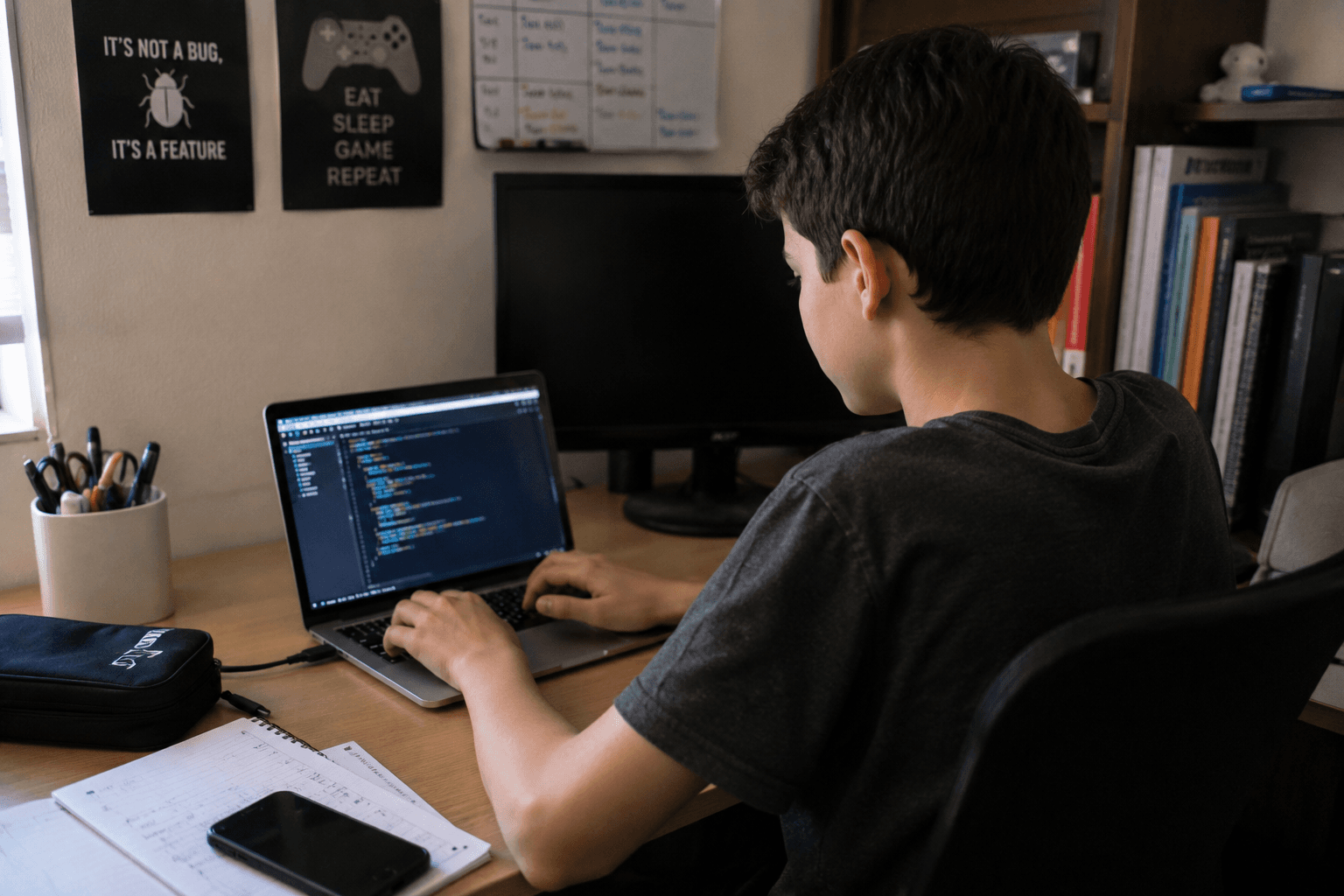
Learning to code was presented as one of the safest investments anyone could make for a career. Schools, universities, employers, governments and social media encouraged students to develop programming skills because software was becoming part of almost every industry.
Today, the conversation sounds a bit different because AI can generate code, complete functions, explain programming concepts, and even build simple applications from a single prompt.
So many parents, students, and business leaders are asking a reasonable question: Will future generations still learn to code, or will coding become something only specialists need?
After spending years recruiting software engineers, technical architects, engineering managers, and technology leaders, I do not think the question is whether people will stop learning to code. The more useful question is what learning to code will actually mean over the next decade. Yes, you know, hiring trends rarely move in a straight line, and technology usually changes job requirements instead of making them disappear.
Recruitment conversations already reflect this shift because employers are becoming less interested in candidates who simply know a programming language and more interested in people who understand systems, solve business problems, communicate clearly with technical and non-technical teams, and can work effectively with AI tools without depending on them for every decision.
Coding Is Becoming More Accessible, Not Less Important
Artificial intelligence has lowered the barrier to writing software because beginners can now generate sample code within seconds, receive explanations for unfamiliar concepts, and experiment much faster than previous generations of developers. This creates the impression that coding itself is becoming less valuable.
Recruiting experience suggests something different.
Many junior candidates now arrive at interviews with polished portfolios that look impressive during an initial review, but technical assessments often reveal gaps in debugging, architecture, testing, or understanding why the code works. Hiring managers increasingly notice that generating code is much easier than maintaining software that supports thousands or millions of users.
Writing code has never been the hardest part of software engineering. Understanding requirements, identifying trade-offs, reviewing security risks, and making systems reliable usually consume far more time than typing syntax.
Future developers may write fewer lines manually, but they will still need to understand what those lines actually do.
The Definition of Coding Is Already Changing
When many experienced engineers started their careers, learning to code meant memorizing syntax, understanding algorithms, and spending hours finding small mistakes hidden inside long files.
Today's developers work differently. Integrated development environments provide intelligent suggestions. Cloud platforms automate infrastructure. AI assistants explain unfamiliar frameworks almost instantly.
Future generations may spend less time remembering language syntax and more time learning how software systems interact.
From a recruitment perspective, this shift changes interview priorities. Several engineering managers now spend less time asking candidates to solve abstract programming puzzles and more time discussing architecture decisions, production incidents, collaboration, testing approaches, and how applicants validate AI-generated code.
That does not reduce the value of programming knowledge. It changes where that knowledge creates value.
Employers Rarely Hire Programming Languages
One hiring pattern appears repeatedly across industries.
Job descriptions often list several programming languages, but hiring decisions usually depend on something much broader.
Engineering leaders hire people who can contribute to solving business problems.
Yes, you know, a company developing healthcare software faces different challenges than a financial technology startup or a manufacturing business modernizing factory systems. Two candidates with identical Java experience may perform very differently because one understands distributed systems while the other mainly copies existing code into new projects.
Programming languages change. Business problems remain. Candidates who understand both technology and business context consistently perform better throughout recruitment processes.
AI Will Create Different Entry Paths
Many graduates worry that AI will remove junior developer opportunities because companies may need fewer people for routine coding tasks.
Some organizations are certainly adjusting graduate hiring, but another pattern is emerging.
Junior developers increasingly spend less time writing repetitive code and more time reviewing AI suggestions, testing outputs, documenting decisions, improving automation, and collaborating with experienced engineers.
These activities build valuable engineering judgment. In recruitment, potential has always mattered alongside technical ability.
Managers often hire junior candidates because they demonstrate curiosity, structured thinking, adaptability, and willingness to learn, even when their technical experience remains limited.
AI does not eliminate these qualities. If anything, it makes them easier to identify because interviewers can distinguish candidates who genuinely understand software from those who simply rely on generated answers.
Technical Interviews Are Quietly Evolving
Technical interviews have received criticism for years because many assessments reward memorization rather than practical engineering ability.
That criticism has become more relevant with AI. If coding assistants can instantly produce standard algorithms, asking candidates to reproduce them from memory becomes less informative.
Many organizations now redesign interviews around practical work. Instead of asking applicants to write perfect code from scratch, interviewers may ask them to review existing code, identify security issues, improve performance, explain architectural decisions, or evaluate AI-generated solutions.
As recruiters, we often see candidates surprised by these interviews because they prepared for traditional coding exercises while employers wanted evidence of engineering judgment. The hiring process increasingly reflects everyday work rather than university examinations.
Schools May Need to Teach Computing Differently
Educational systems often adapt more slowly than labour markets.
Many computer science courses still focus heavily on syntax, isolated assignments, and individual programming exercises.
Those foundations remain useful, but future students may benefit even more from understanding software design, cybersecurity, data quality, ethics, cloud computing, AI collaboration, and communication within engineering teams.
Companies frequently tell recruiters that technical skills can be developed after hiring, while problem solving, curiosity, accountability, and teamwork are much harder to teach.
Education that combines technical knowledge with practical decision-making may better prepare graduates for future software careers.
The Skills Shortage Conversation Needs More Precision
Recruiters often hear employers describe a shortage of software developers. Sometimes that description is accurate. Sometimes it hides a different issue.
Companies occasionally struggle to hire because salary expectations do not match market conditions, interview processes are too slow, technical assessments discourage strong applicants, or job descriptions combine responsibilities from several different roles.
Yes, you know, after enough years in recruitment, you begin to notice that a reported talent shortage can sometimes be an assessment problem or a hiring process problem rather than a genuine absence of skilled professionals.
Future generations may still produce many capable developers, but organizations will need hiring practices that recognise potential instead of searching endlessly for candidates who meet every requirement listed in a job description.
Coding Will Become Part of More Careers
Another noticeable trend is that programming knowledge is spreading beyond software engineering.
Data analysts automate reporting. Marketing teams build simple workflows. Financial professionals write scripts for analysis. Scientists process research data. Operations teams automate repetitive administrative tasks.
These professionals may never identify themselves as software developers, yet they still write code or work closely with AI tools that generate code.
This wider use of programming changes how coding is taught.
Instead of expecting everyone to become professional software engineers, education may focus on helping more people understand enough programming to improve their own work.
That broad understanding could become as valuable as spreadsheet skills became for previous generations.
Future generations will almost certainly continue learning to code, although the experience will look different from the one many experienced engineers remember. Memorising syntax will matter less than understanding systems, validating AI-generated solutions, collaborating across disciplines, and making thoughtful technical decisions that support business goals.
Recruitment already reflects this transition. Employers continue to value programming ability, but they increasingly reward judgment, adaptability, communication, and practical problem solving because these qualities remain difficult to automate. AI changes how software is created, yet it does not remove the need for people who understand why software behaves the way it does and how technology supports an organisation.
Perhaps the more interesting question is not whether future generations will learn to code, but whether they will learn to think like engineers. From years of watching hiring markets evolve, that distinction has often separated candidates who secure long-term careers from those whose skills become outdated after the next wave of technological change.
© 2026 Recruitment.bg — All rights reserved.