
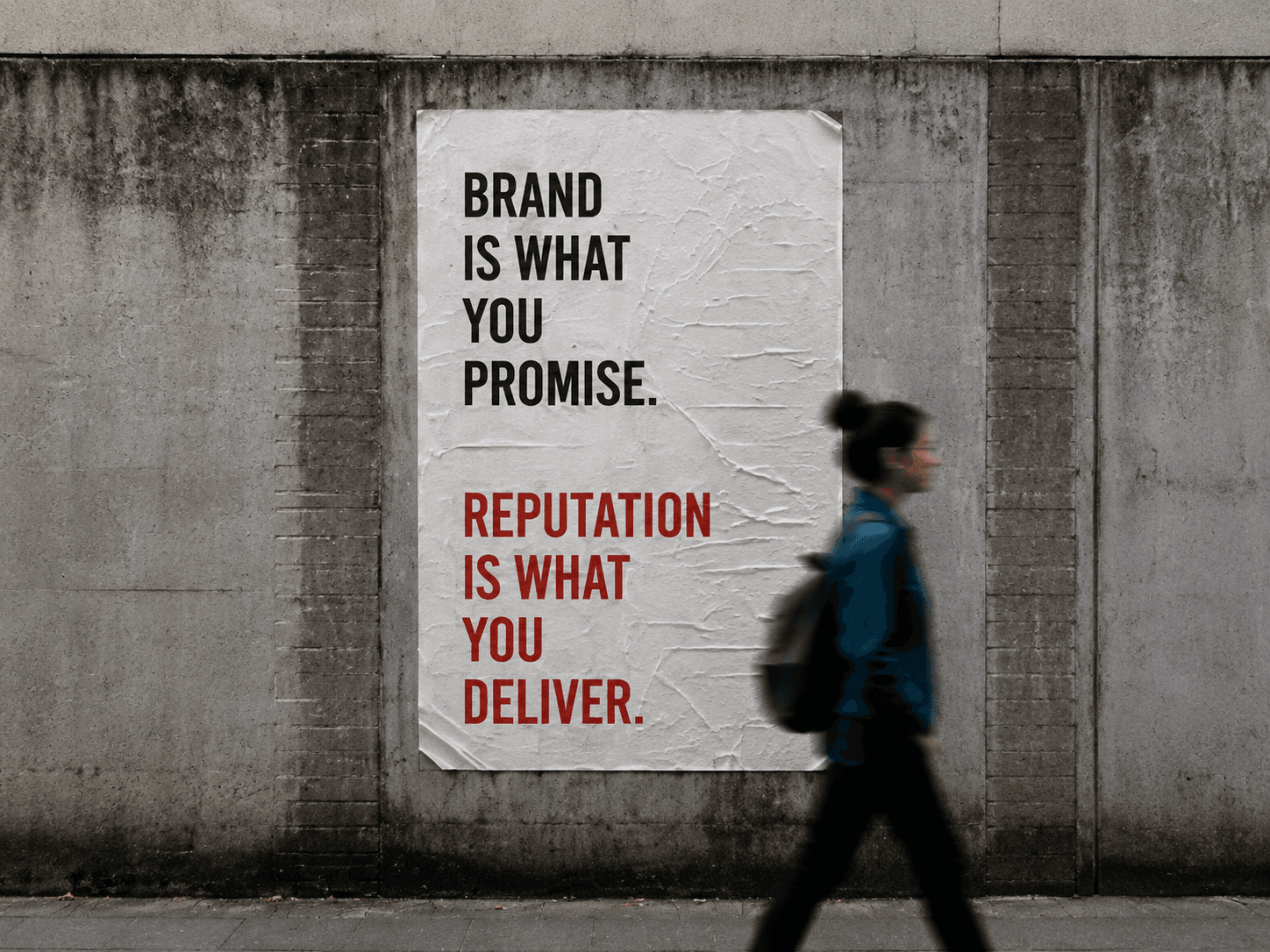
Every company has two employer brands.
The first one is intentional. It lives on the careers page, in the LinkedIn posts about team offsites, in the carefully worded "why work with us" section that someone in HR spent three weeks refining. It talks about culture, growth opportunities, flat hierarchies, and a passion for innovation. It has good photography and probably mentions work-life balance.
The second one is the real one. It lives in how long it takes to get a response after an application. In what the interviewer says — and doesn't say — when a candidate asks what the biggest challenges in the role are. In the Glassdoor review left by someone who made it to the final round and never heard back. In what your current employees say when a friend asks them what it's actually like to work there.
Most companies invest heavily in the first brand and pay almost no attention to the second. This is a mistake, because candidates trust the second one completely and are increasingly skilled at finding it.
The Careers Page Is the Last Place Candidates Look for the Truth
This is not a criticism of careers pages specifically. It's an observation about how trust works.
When candidates are evaluating a company seriously, they are not reading your mission statement looking for disqualifying information. They're looking for confirmation of what they've already learned elsewhere. The careers page is where they end up after they've already formed an opinion — not where the opinion gets formed.
Where does it actually get formed?
Glassdoor and similar review platforms, obviously. But also LinkedIn — specifically, how long people tend to stay at your company, what roles they move into afterward, and whether the people who left seem to have left on good terms or quietly disappeared. Mutual connections who've worked there or interviewed there. Reddit threads about the industry. The tone and content of the job posting itself. The speed and quality of the first recruiter interaction.
By the time a strong candidate walks into your first interview, they've already assembled a picture of your company from a dozen sources that you don't control and probably aren't monitoring. The interview either confirms that picture or contradicts it. What the careers page says is largely irrelevant at that point.
The Interview Process Is a Brand Touchpoint. Most Companies Treat It Like Admin.
Every interaction a candidate has with your organization during the hiring process is communicating something about what it's like to work there.
A recruiter who responds within 24 hours and is genuinely prepared for the conversation communicates that the company respects people's time. A recruiter who sends a generic message three weeks after the application, mispronounces the candidate's name, and clearly hasn't read the CV communicates something very different.
An interviewer who asks thoughtful questions, gives honest answers about the challenges of the role, and treats the conversation as genuinely two-directional communicates that the company has good people and values intellectual honesty. An interviewer who reads from a script, dodges questions about team turnover, and oversells the role communicates that something is being hidden.
A process that takes four weeks and six rounds for a mid-level position communicates that the company either can't make decisions or doesn't value the candidate's time — and in both cases, the candidate is getting real information about what working there will feel like.
None of this requires a brand strategy to fix. It requires treating the hiring process as the first real experience of your company culture — because that's exactly what it is.
What Your Employees Are Actually Saying
The most powerful employer brand channel most companies completely ignore is their existing workforce.
Not the testimonials on the careers page. Not the curated LinkedIn posts from the head of people operations. The actual, unscripted things your employees say when a friend asks "what's it like working there?"
That conversation happens constantly. For companies with a strong culture and engaged teams, it's the most effective recruiting tool in existence — a warm referral from a trusted source, delivered with genuine enthusiasm, to a candidate who already has some reason to consider the company. For companies with culture problems, it's the most effective deterrent in existence, and no amount of employer branding spend counteracts it.
The uncomfortable truth is that you cannot manufacture a good answer to "what's it like working there?" You can only create the conditions that make the honest answer a good one.
This means the employer brand conversation is ultimately not a marketing conversation. It's a management conversation. It's about how people are treated day to day, whether their managers are good, whether the work is meaningful, whether the company follows through on what it promises during the hiring process. These are operational questions, not communications questions.
The Gap That Costs You Hires You'll Never Know You Lost
The most damaging consequence of the gap between perceived and actual employer brand is largely invisible.
You can track the candidates who make it into your pipeline and drop out. You can, with some effort, track the candidates who received offers and declined. What you almost certainly cannot track are the candidates who researched your company, didn't like what they found, and never applied in the first place.
These are often your best candidates. The people with the most options are the most diligent researchers, because they can afford to be selective. They're the ones reading the Glassdoor reviews carefully, asking their network about your company, and making a quiet decision to pursue other opportunities before you ever had a chance to make your case.
You'll never see them in your ATS. You'll never know they considered you. The gap between your intended employer brand and your actual one is filtering them out silently, and your recruitment metrics will never capture the loss.
What to Actually Do About It
The starting point is an honest audit — not of your careers page, but of your candidate experience from the outside.
Apply to one of your own job postings anonymously, or have someone do it for you, and track every touchpoint: how long the response takes, what the communication feels like, what the interview process communicates about the company. Read your Glassdoor reviews not defensively but as a data source. Talk to recent hires about what they found when they researched you during the process, and whether the reality matched what they expected.
What you find will be uncomfortable in places. That discomfort is useful — it's the gap between the two employer brands made visible.
From there, the fixes tend to fall into two categories.
The first is process: response times, communication quality, interview structure, feedback loops, and the basic courtesy of closing the loop with every candidate regardless of outcome. These are operational improvements that don't require a brand strategy — they require someone with authority to set standards and hold the team to them.
The second is substance: the actual employee experience that generates the word-of-mouth, the reviews, the referrals, and the reputation that no careers page can manufacture. This is slower to change and more important to get right.
The companies with the strongest employer brands are not the ones with the best copywriting. They are the ones where the honest answer to "what's it like working there?" is genuinely good — and where they've been thoughtful enough to make sure candidates can find that answer before they ever walk through the door.
That's an employer brand worth having.
© 2026 Recruitment.bg — All rights reserved.